|
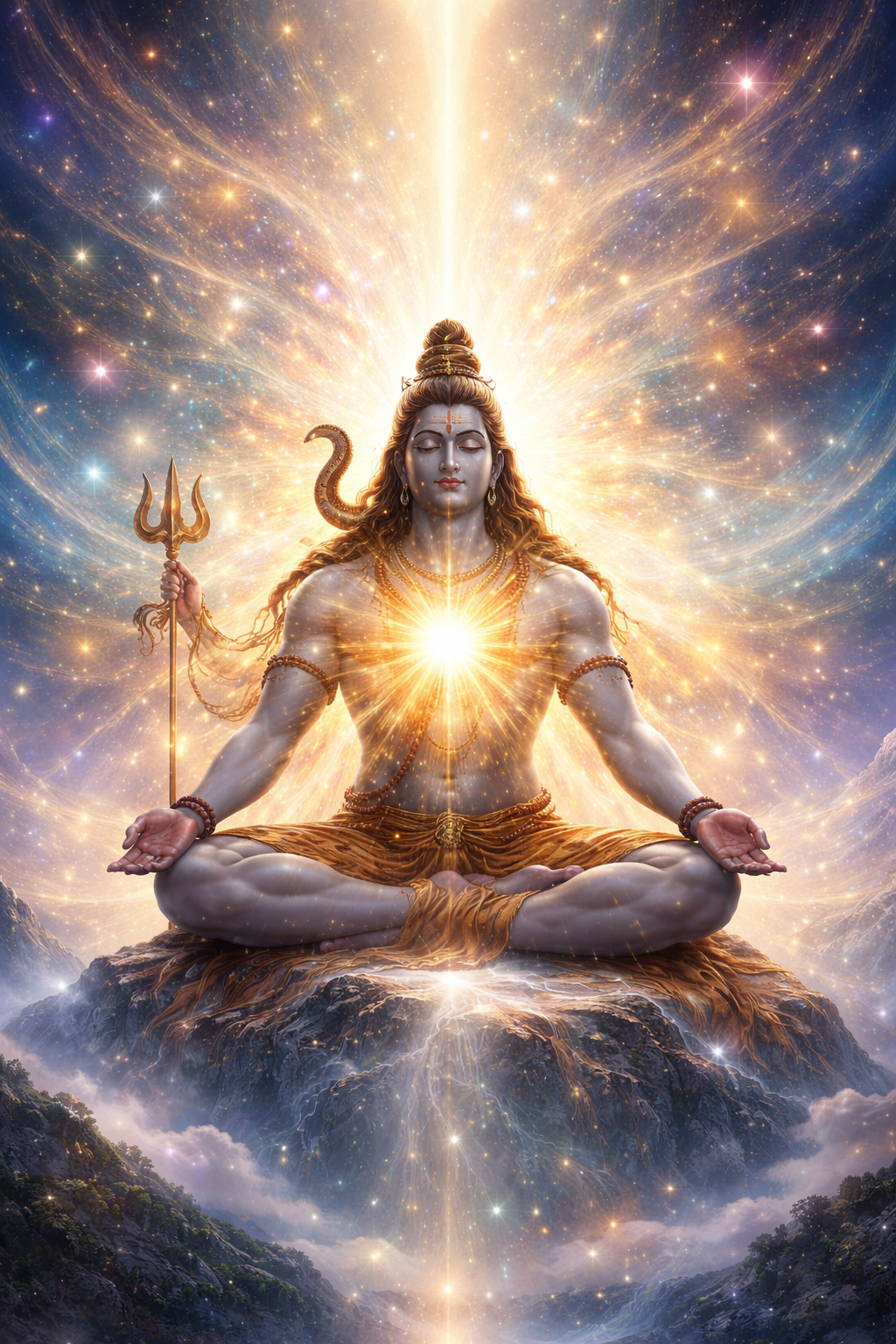
Āsana in
Three Levels
(by Krishna Darshan)
The practice of āsanas, its real yogic
meaning and goal, often changes over the years of experience and
study in long-term practitioners.
The following is simply a sharing of my own
experience and understanding of Yoga āsana, which I have been
practicing and studying for nearly 45 years,
and teaching for over 40
years, and contemplating on the teachings of various
classical yoga scriptures.
I dont know if this is a lot of time or actually very
little time,. Real understanding of yoga is not acquired in a
single lifetime. Anyhow, i would like to share this with those
who could be interested and benefit from it.
The word āsana in Sanskrit literally
means: “a seat,” “a place to sit,” or “a sitting position.”
By Patanjali’s definition, an āsana is that
posture which is steady, without movement or change (sthira),
and comfortable, without tension, at ease (sukham).
In the first level of practice, the
āsana is experienced mainly on a physical level. Āsana becomes
the art of releasing all tension from the body while at the same
time remaining in a state of effortless, quiet well-being.
As long as the mind is identified with the
body, effort persists.
When the mind becomes absorbed
(samāpatti) in something infinite and stable, the sense of “I am
holding the posture” dissolves.
Then effort becomes relaxed
(no strain).
Āsana here means a comfortable sitting
position for the body, free of all concerns.
Before practice, the body is usually full
of subconscious tensions; it is in constant motion, even through
subtle, continuous movements. The body is not capable of fully
relaxing and being at ease. This affects and agitates the mind,
and the mind in turn affects the body—thus creating a vicious
circle.
First, various āsanas need to be practiced
in order to stretch the body, release muscular tension, give the
muscles proper tone, mobilize the spine, joints, stimulate blood
circulation, and most importantly, to release and mobilize
stagnated prāṇa (vital energy) from the nāḍīs (channels),
allowing it to flow freely without obstruction.
To accomplish this, the āsanas apply
pressure to various areas of the body known as marma points
(similar to acupressure/acupuncture points), areas where there
is a confluence between the energetic prāṇic body and the
physical body.
The body is trained to relax in each of
these positions, and by doing so, energy is released and the
mind calms down.
At the same time, the breath is trained to
become slower, calmer, and deeper. This facilitates the movement
of prāṇa through the nāḍīs, allowing it to reach wherever it is
needed.
There is an experience of great physical
and mental well-being when this is accomplished.
This is the first level of āsana, but
progress in āsana does not end there.
The second level of āsana takes
place at the level of the heart center (hṛdaya). It is a
practice of giving the emotions a place to sit, rest, and
be at ease. The emotions become tranquil, free from ups and
downs, and there arises a sensation of inner fullness, inner
peace, joy, and a higher experience of love. This is not
ordinary emotional love, but what is called “prem”, or divine
love—a feeling of connection with the whole, with the Divine,
and with every being, where emotions such as fear, anger,
jealousy, envy,
and others, dissolve and cease.
The Sanskrit term hṛdaya
translates as “the heart,” but it does not refer to the physical
heart. Rather, it indicates an emotional and spiritual center,
although it also influences the physical heart and the entire
thoracic region.
If we analyze its etymological components:
- hṛ — “to take,” “to carry,” “to draw”
- da — “to give”
- ya — “to go,” “to move”
It may thus be understood as:
- “that which continually takes and
gives”
- “the center that receives and
distributes”
The physical heart performs this function
at the level of blood circulation, but the hṛdaya operates at a
more subtle level. It relates to the inner act of giving,
surrendering, renouncing attachment, receiving the blessings and
opening the heart to all beings.
In classical Haṭha Yoga texts, it is
mentioned that there is a knot (granthi) before the entrance to
the heart, known as the Viṣṇu-granthi. The śakti of Viṣṇu is the
goddess Lakṣmī, who is also represented as one who both gives
and receives all forms of blessings and abundance. With one hand
she bestows wealth and blessings, and with the other she
receives everything. This teaches us to give selflessly, without
expectation, with generosity and detachment.
This knot, which prevents the prāṇa from
entering this center, can be broken through a combination of
āsana, prāṇāyāma, mantra, meditation on cosmic divine love, and
complete selflessness in action and thought.
When emotions are allowed to be seated and
fulfilled in this center, this constitutes the second level of
āsana, bringing a deep experience of inner joy and peace. At
this level, physical flexibility and mobility no longer
matter—you have gone beyond the physical.
There is even a third level of
āsana, which concerns giving a seat to the mind.
In the same way that a bird needs a branch
to rest its wings, the constantly agitated mind needs a place to
sit and rest. This place is the Ājñā cakra. However, the Ājñā
cakra is not a physical location; it is a state of knowledge and
wisdom in which the mind becomes fully focused, and from there
dissolves into infinite consciousness.
At this level, there is another
knot known as the “Rudra-granthi”. It prevents the mind from
relinquishing dualistic perception. It is the seat of avidyā
(spiritual ignorance), where distinctions still remain between
objects and between the individual Self and God.
This granthi can be broken through constant
meditation on the absolute, non-dual reality known as Brahman in
the Upanishads.
There comes a moment when the mind sits
quietly in this single thought and awareness of Brahman. That is
the highest level of āsana. At this level, the body may be in
any position—it is no longer relevant.
Patanjali states in the Yoga Sutras of
Patanjali:
prayatna-śaithilya-ananta-samāpattibhyām
“Āsana is mastered by relaxation of effort and absorption in the
infinite.”
Yoga Sutra 2.47
- prayatna = effort
- śaithilya = relaxation, loosening
- ananta = the infinite (or Ananta, the
cosmic serpent)
- samāpatti = absorption, contemplation
This sūtra explains that āsana becomes
perfected not through force or strain, but through the release
of effort and absorption of the mind in the infinite (Ananta).
There are two types of effort. One is a
tense effort, trying to force something to happen. The other,
which is positive, is a relaxed effort, where although there is
still some form of action, there is total detachment from its
results and a sense of flow rather than struggle. This is what
this sutra means as a relaxation of effort.
One wouldn’t be able to sit straight or to
direct the thoughts into one direction without some type of
effort. But masery of asana comes from relazing and detaching
while doing that effort.
The mind cannot be absorbed in both the
finite and the infinite at the same time.
In modern yoga, āsana is often taught as a
form of physical therapy, where students are guided to focus
more on the body, joints, muscles, and alignment. But is the
body finite or infinite? The body is certainly finite. It is
constantly changing, subject to disease and decay, and has a
beginning and an end. The infinite Self or Brahman does not.
Patañjali and other great yoga masters
emphasized that in order to attain full mastery of āsana, the
mind must be directed toward the infinite, not toward the finite
body or worldly concerns.
However, this belongs to the most advanced
level of practice. Beginners must first focus on the body, then
on the breath and emotions, and finally on merging the mind in
the infinite and eternal Self, the Ātman.
The great Adi Shankaracharya beautifully
expresses this in the following verse:
sukhenaiva bhaved yasmin ajasraṁ brahma
cintanam
āsanaṁ tat vijānīyāt netarat sukhasanam
Aparoksha Anubhuti-112
“That posture in which contemplation of Brahman flows
effortlessly and continuously—
that alone is āsana, not any
other that disturbs one’s ease.”
In various yogic texts, Siddhāsana (the
posture of the accomplished adept) is described as the most
important and beneficial of all postures.
Here is Śaṅkarācārya’s definition of
Siddhāsana:
siddhaṁ yat sarva-bhūtādi-viśvādhisṭhānam
avyayam
yasmin siddhāḥ samāviṣṭās tad vai siddhāsanaṁ viduḥ
Aparoksha Anubhuti-113
“That which is ever established, the unchanging support of the
universe,
that from which all beings arise, and in which the
realized abide—
that is known as Siddhāsana”
Om Tat Sat
If you want to share this article please do it by sharing the link to this page. For other uses please write to us at info@yoga-elsilencio.com
- Krishna
Darshan is a direct disciple of Swami Vishnudevananda and
has been a yoga and meditation teacher for over 40 years.
He serves as the main Hatha Yoga instructor in many Sivananda
Yoga Teachers Training Courses (TTC), advanced yoga teachers
training courses (ATTC), Sadhana Intensive Courses and advanced sadhana retreats
at various of the Sivananda Ashrams worldwide.
He is the director of the Sadhana kutir
- El Silencio, a retreat center in Uruguay. He is also a certified professional vedic astrologer and teacher.
Click for more
articles and videos by Krishna Darshan
|


